
Interior trim
- Door-trim bonding
- Console assembly
- Decorative trim

AUTOMOTIVE BONDING & PROTECTION
Select materials for automotive displays, lamps, electronic housings and PCBAs by separating bonding, sealing, protection and heat-transfer roles. Review substrates, cure, thickness, environmental tests and production.
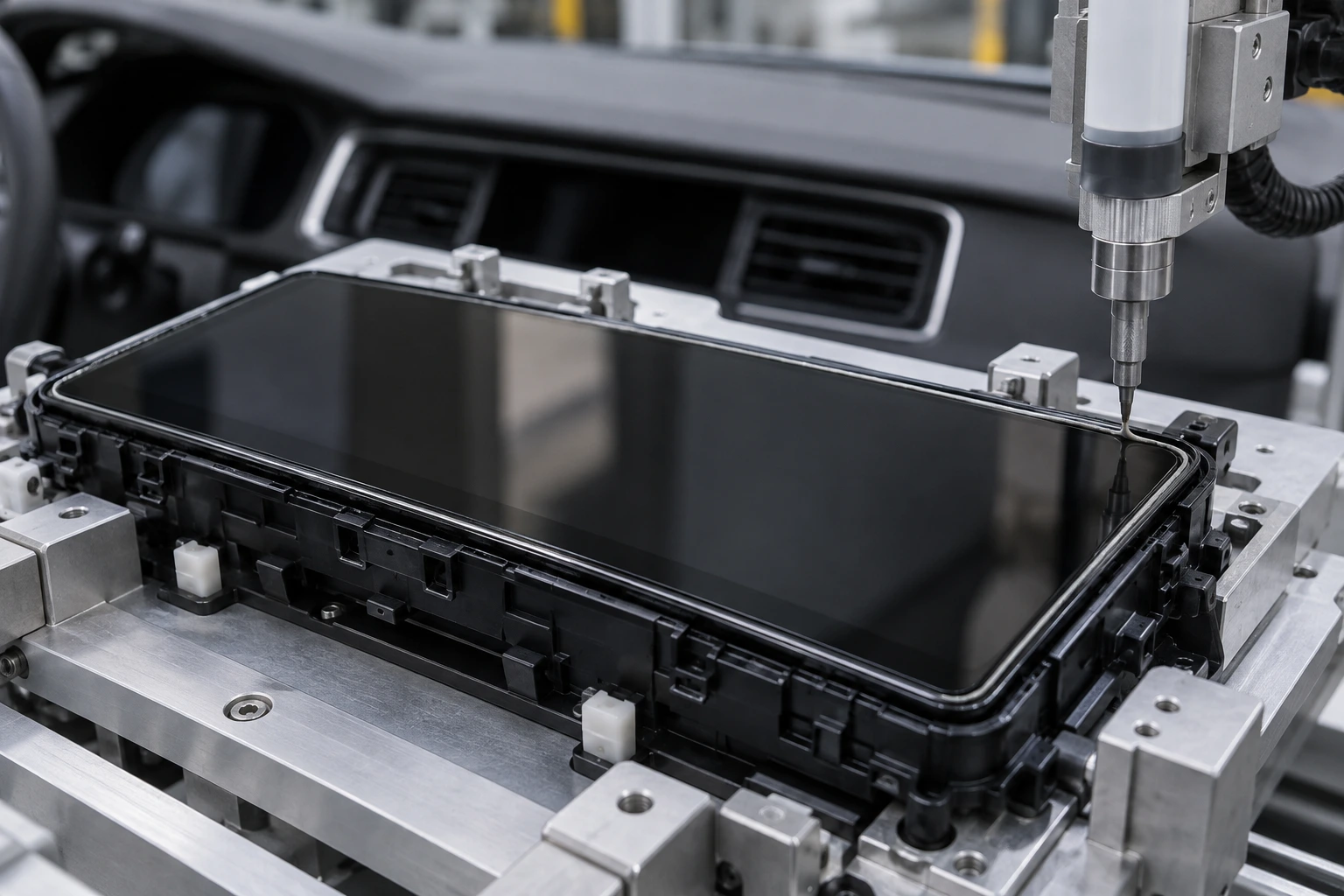
Review joint substrates/gap and the cure process available in assembly.
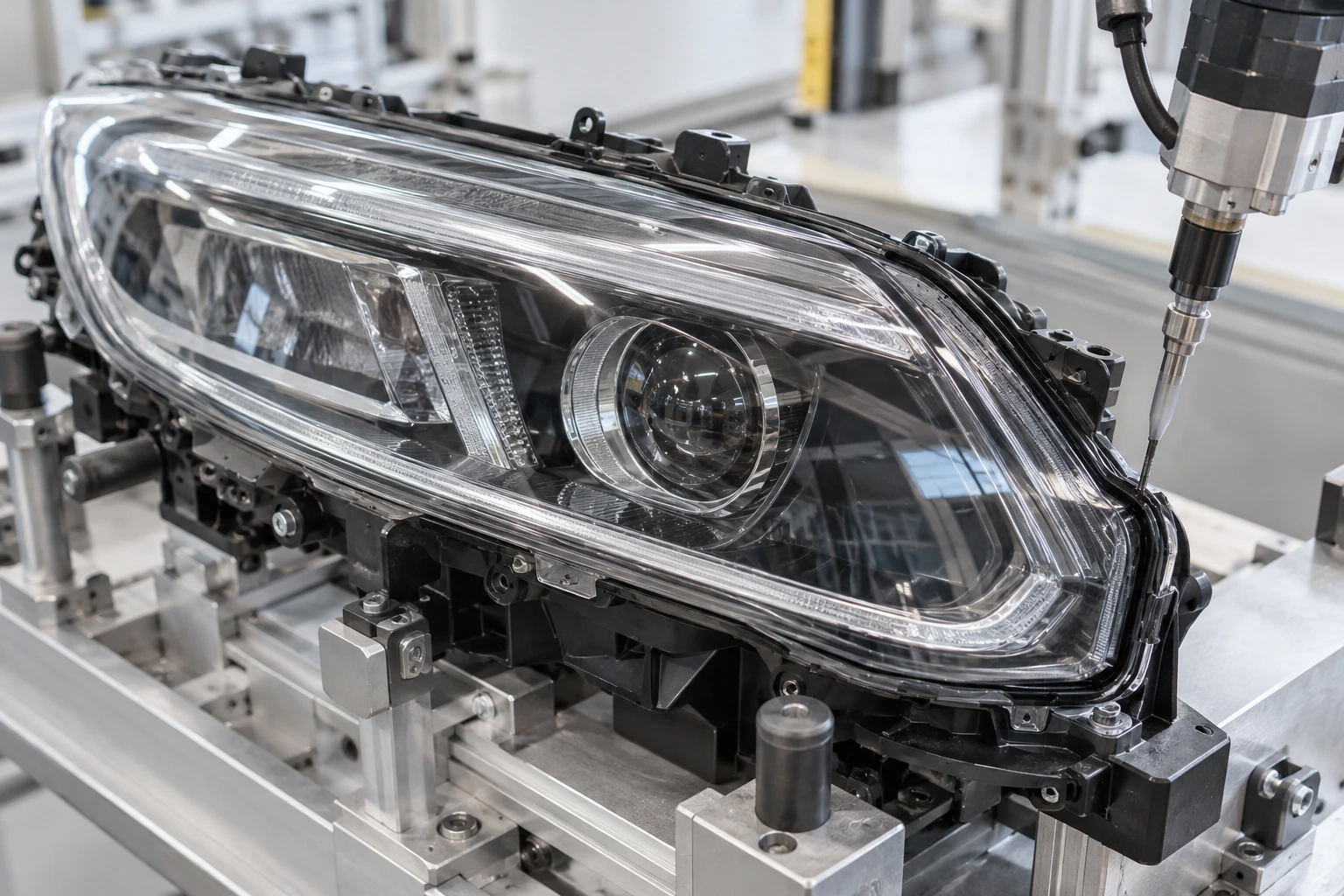
Review the seal path/fill boundary and environmental durability, including leakage and stress.
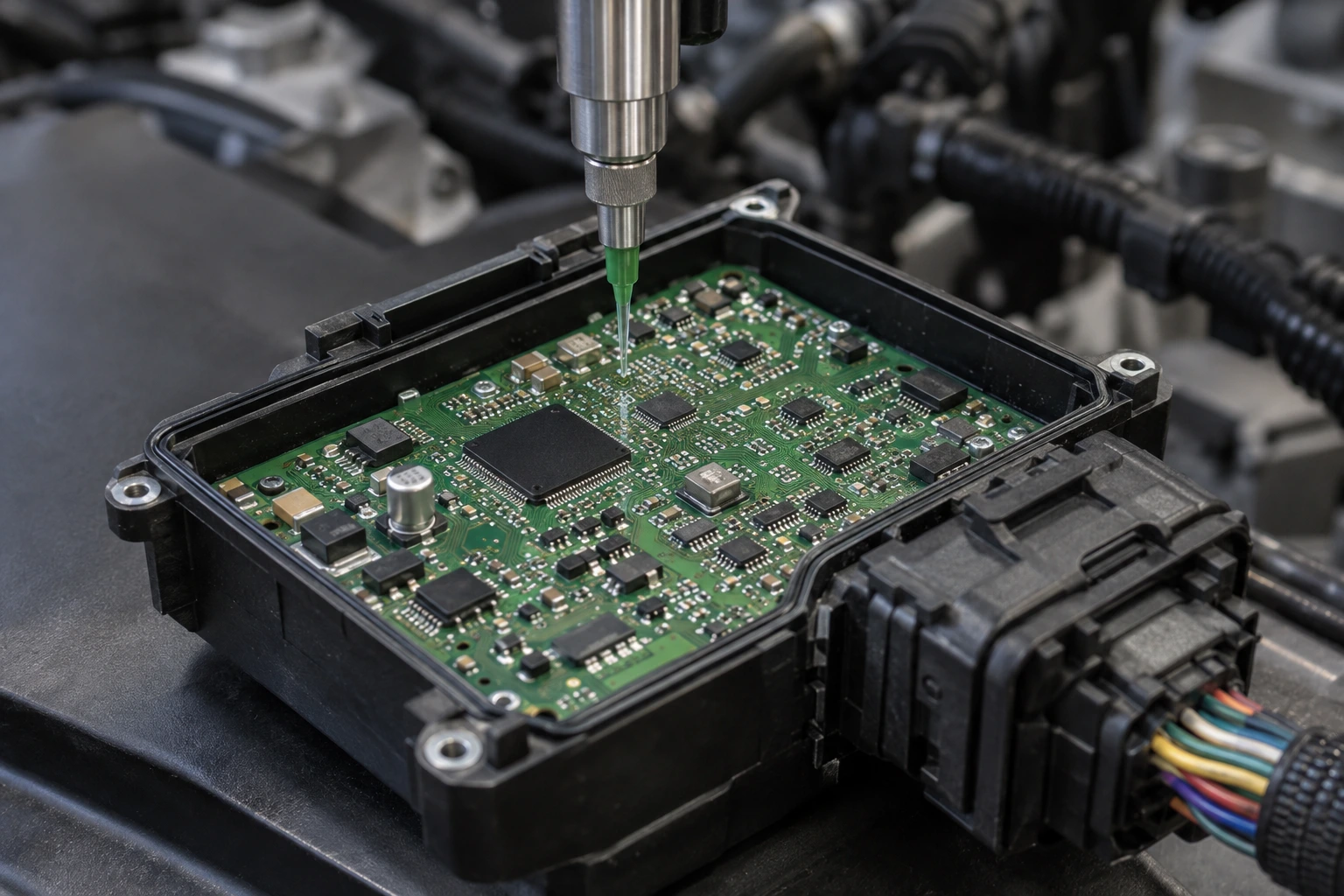
Exclude contacts/test areas and review coverage, thickness and electrical requirements.
Automotive electronics & sensing
Separate optical alignment from housing seals. Review the material and process at each location.
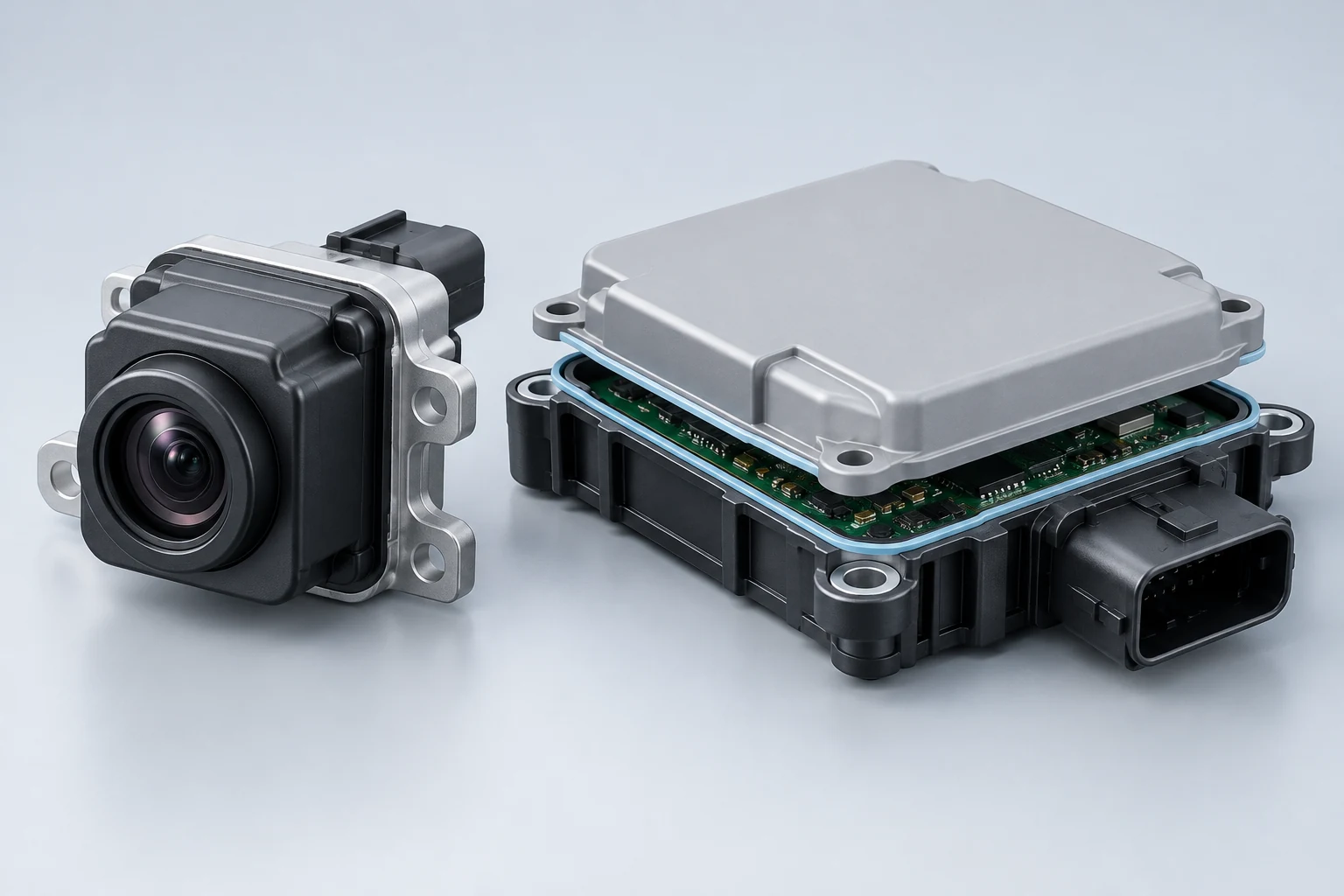
Locate optical fixation, housing seams and cable-entry seals.
Review frame fixation. Optical-bonding scope is confirmed separately.
Define thermal joints, reinforcement, seals and coating coverage.
Share the substrates, joint geometry, cure process and environmental conditions.
These links open existing material categories. Review suitability for the location against substrates, process and evaluation conditions.
Separate optical alignment from mounting and review light access, gaps and deformation.
Define seal paths, substrates, flexibility requirements and the cure process.
Review thin-film protection and thermally conductive bonding as separate roles.
Optical alignment sets the relationship between optics and sensor; mounting joins the module to its support. Evaluate focus changes separately from mechanical mounting requirements.
Housing seals and EMI shielding have different roles. A sealant category alone does not establish shielding; review the required electrical/RF behaviour and material location separately.
Open a component to see the bonding location and evaluation inputs.
Holding the relative position of a lens and image sensor is a different task from mounting the camera module to its supporting structure.
Locate the radome-to-housing perimeter joint and seals around connectors or pins. Antennas, boards and housings involve different material roles.
Identify whether the task concerns a controller cover/base, cable entry, connector pins or the board surface.
SELECTION IN CONTEXT
Bonding fixes parts; sealing closes joints; coatings protect board surfaces; thermal interfaces transfer heat. Select each role for the actual substrates, gap or thickness, cure process and environment.
Define the differences between contacts before comparing candidate materials.
| Contact | Selection & evaluation | Record |
|---|---|---|
| Bonded components & surfaces | Define substrates, preparation, bond area and gap, then match required strength/flexibility and durability conditions. | Substrates/preparation, joint design, gap and load |
| Dispensing, mixing & cure | Check access for light/heat and whether mixing ratio, working time and assembly cycle can be controlled in production. | Method, dose, mixing ratio, exposure/heating and working time |
| PCBA protection boundary | Separate protected surfaces from contacts/test areas; review thickness, cure, electrical requirements and rework. | Masking, thickness, cure, insulation and inspection conditions |
| Thermal interface & environmental durability | Review interface thickness, area, compression and thermal resistance alongside conductivity, then compare condition after humidity/temperature or thermal cycling. | Interface thickness/area, contact conditions, thermal resistance and environmental test conditions |
Separate fixing, sealing, surface protection and heat transfer, and define components and targets.
Record preparation, dispensing, mixing, cure and assembly, and compare candidates under feasible production conditions.
Evaluate joints, coatings and thermal interfaces consistently against the required electrical, mechanical and thermal criteria.
Review light access and the grade-specific cure mechanism. Secondary or dual cure is not shared by every product; confirm the required conditions in the records and actual joint.
Surface protection and enclosure sealing are different functions. Evaluate ingress paths, connectors, excluded areas and coating continuity against the complete device requirements.
Heat transfer also depends on thickness, contact, area and assembly. Define whether bonding, a non-curing material or insulation is required, then compare interface thermal resistance and durability.
Match chemistry, cure and numerical properties to current grade-specific records. An automotive application category alone does not establish adoption or approval on a specific part.
Displays, camera optics, radar boards and housing joints.
Review material types & grades →Review joint sealing separately from encapsulation around geometry, stress and leak criteria.
Review material types & grades →Define protection and excluded areas, then review thickness, cure, electrical requirements and rework.
Review material types & grades →Select non-curing grease separately from an adhesive. Review a curing thermal material separately when bonded fixation is required.
Review material types & grades →Use the role-specific enquiry to share the component, substrates, current material, dispensing/cure and issue. Start with known conditions to review candidates and required records.
Return to the automotive overview →