
Cartridges & valve stems
Measure operating torque, temperature effects and cycling.

COMPONENT APPLICATION
Review lubrication of faucet cartridges, valve stems and O-rings through seal materials, water contact, operating torque and assembly conditions. Separate lubricating from thermal silicone greases.
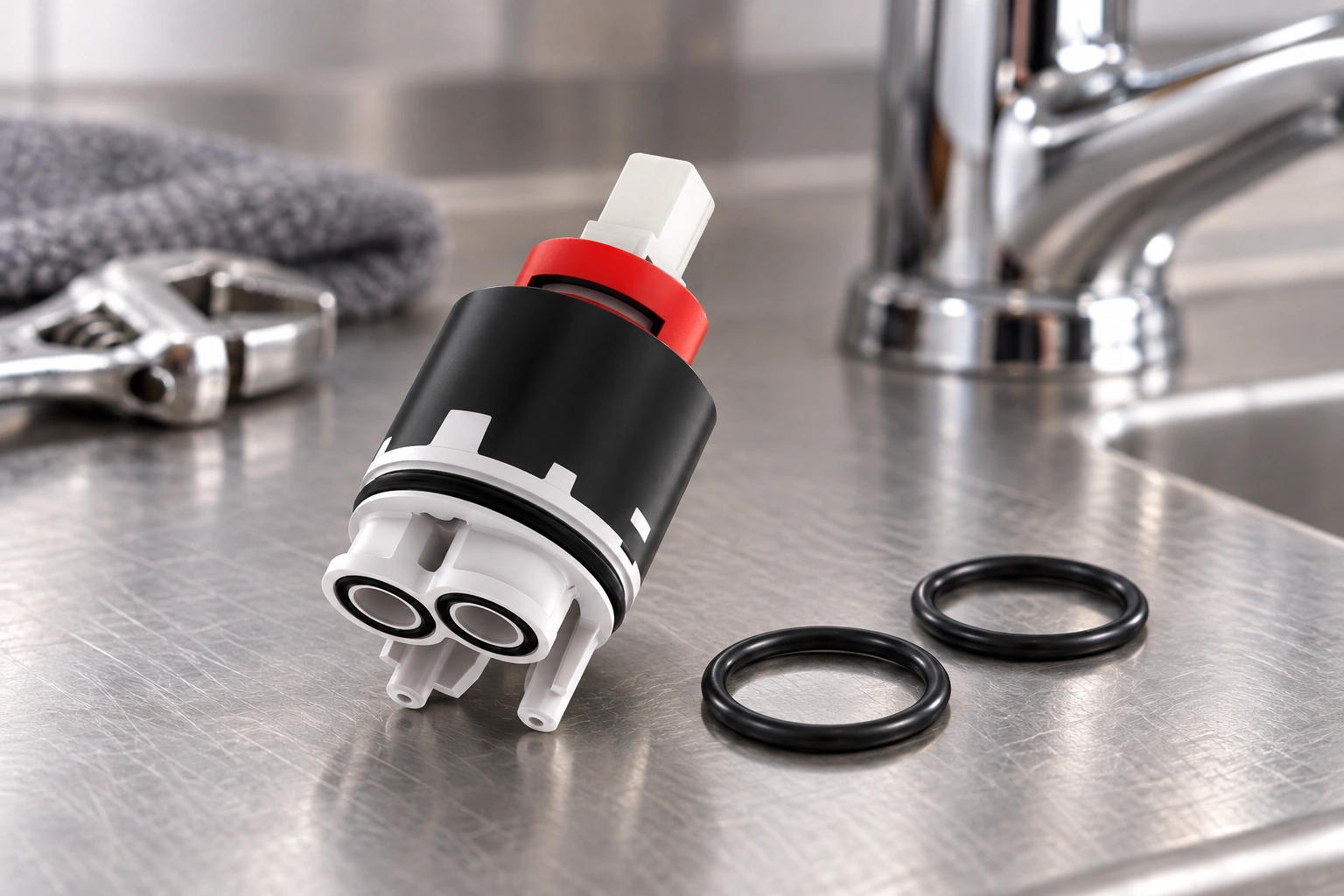
Measure operating torque, temperature effects and cycling.
Compare insertion force, twisting, dimensional changes and damage.
Confirm exact-grade records and the required water-contact scope.
SELECTION IN CONTEXT
Identify the seal material and contacting water or fluid, then select a grade for the required lubrication and operating torque. The silicone-grease category alone does not establish suitability for every elastomer or potable-water use. Treat cartridge internals, valve stems and O-ring assembly as separate contact conditions.
Define the differences between contacts before comparing candidate materials.
| Contact | Selection & evaluation | Record |
|---|---|---|
| Cartridge & valve stem | Identify moving surfaces and seals, then compare operating torque and post-cycle condition on the actual materials. | Assembly design, ceramic/polymer/elastomer grades and operating angle |
| O-ring assembly | Review assembly lubrication separately from sealing in service; inspect twisting, damage and seating in the groove. | Seal material, groove/mating surface, insertion force and application point/dose |
| Water & fluid contact | Define temperature, pressure, exposure time and cleaning fluids; inspect seal dimensions, hardness, appearance and function. | Fluid, temperature/pressure, exposure time and leakage after cycling |
| Potable water & document scope | Match required approvals to the market, exact grade, contact conditions and current supporting records. | Market, contact scope, exact grade and required records |
List the actual elastomer and part materials together with water and cleaning fluids.
Control dose, assembly procedure, water temperature/pressure and cycles.
Record initial and post-cycle torque, seal condition and leakage.
The shared silicone name does not establish compatibility. Evaluate the actual elastomer compound and grease formulation for swelling and functional changes over the required time and temperature.
Thermal and lubricating greases have different roles and formulations. Select a grade intended for the lubrication requirement rather than substituting a thermal-interface material.
Lubrication alone may not address damage, deformation, groove dimensions or assembly errors. Inspect the seal and mating surface and address replacement or design requirements.
MATERIALS & GRADES
Lubricating compounds for valves, O-rings and elastomer seals. Select around seal material, media and operating torque.
O-ring and seal materials, media, dimensional change, torque and contact scope
View the product family & documentation →Confirm numerical specifications and use scope in current grade-specific TDS and SDS. Share the part drawing, materials, conditions and evaluation targets.
Technical enquiry & samples →