
Cycloidal discs & pin contacts
Review contact load, repeated duty and wear.

COMPONENT APPLICATION
Review tooth contacts, eccentric components, bearings and seals in RV/cycloidal reducers. Compare the specified lubricant, fill quantity/orientation, torque, heat and durability on the actual design.
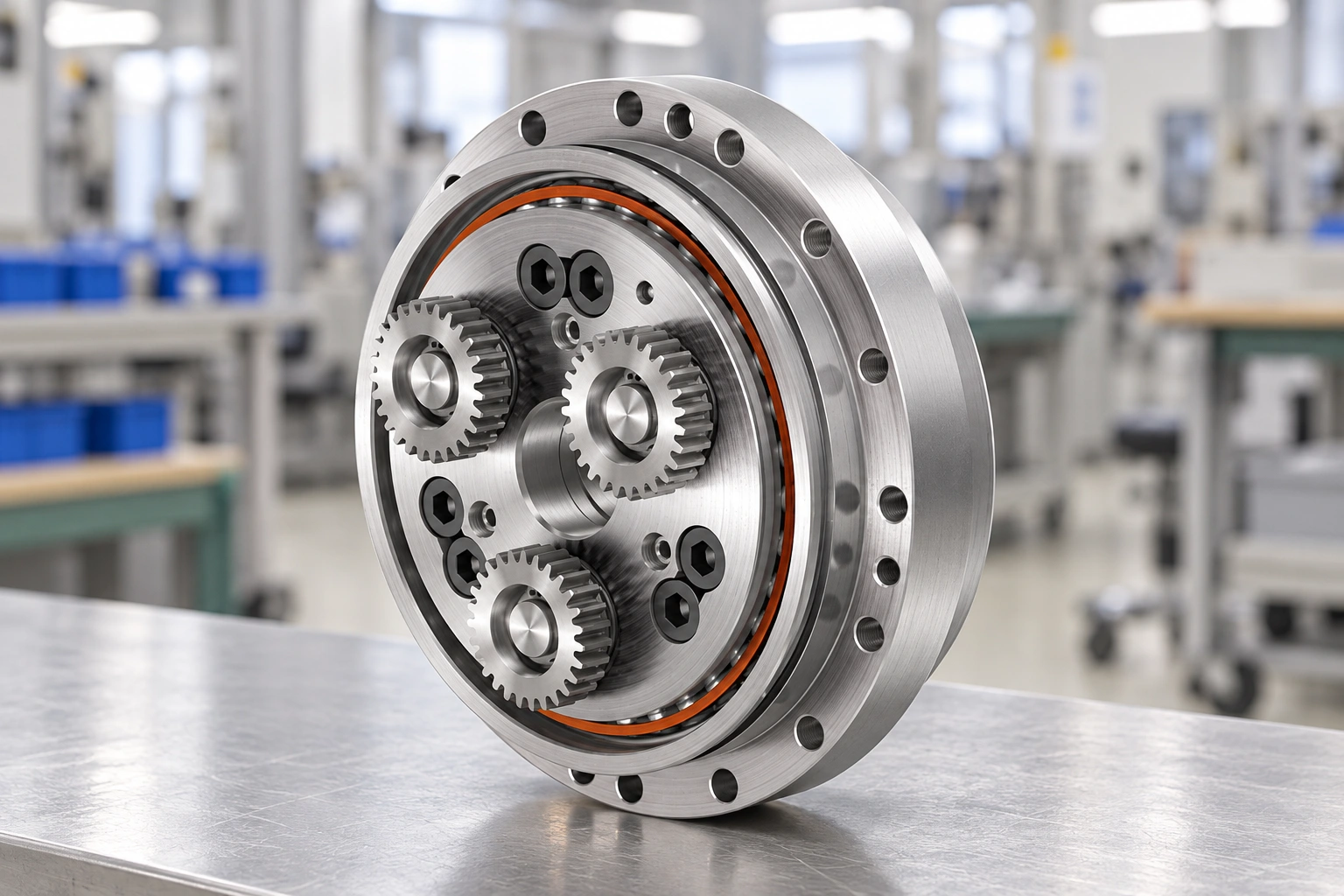
Review contact load, repeated duty and wear.
Measure starting torque, heat and lubricant retention.
Check application points, quantity, seal compatibility and leakage.
SELECTION IN CONTEXT
Start with the reducer model and its manufacturer-specified lubricant and filling procedure. Front-stage gears, eccentric components, cycloidal discs/pins and support bearings have different contact conditions. Evaluate candidates against the actual design, load/speed, temperature and sealing rather than substituting by material name or consistency alone.
Define the differences between contacts before comparing candidate materials.
| Contact | Selection & evaluation | Record |
|---|---|---|
| Model & specified lubricant | Use the exact manual, specified material and duty requirements; the RV/cycloidal category alone is insufficient. | Manufacturer, model, orientation, current lubricant and document revision |
| Tooth contacts, eccentrics & bearings | Control load, input speed and duty cycle when comparing lubrication, wear, sound and vibration. | Contacts, load/speed, duty cycle, initial and post-durability condition |
| Filling & sealing | Follow the specified quantity, procedure and installation orientation; review supply, overfilling and leakage. | Quantity/location, orientation, seal material, leakage and relubrication requirements |
| Start-up, temperature & durability | Separate start-up from continuous running and record temperature rise, torque and durability changes using consistent criteria. | Ambient/housing temperature, start/running torque, method and cycles |
Record the model, lubricant/filling specification and current material, and define why a change is being considered.
Follow manufacturer requirements for residual material, cleaning, quantity, orientation and operation.
Record torque, temperature, sound/vibration, leakage and component condition against the agreed criteria.
Do not transfer a lubricant specification between mechanisms. RV/cycloidal and strain-wave designs have different contacts and filling requirements; use the target reducer specification and actual-part evaluation.
Use the specified quantity. Filling affects not only supply but also churning resistance, heat, pressure and leakage; follow the target reducer procedure rather than adding grease arbitrarily.
Do not assume blending is acceptable. Review the specified and candidate materials, residues and cleaning/replacement procedure using the reducer and lubricant records.
MATERIALS & GRADES
The listed EUBO grades are application candidates, not reducer-manufacturer recommendations, approvals or drop-in equivalents. Review the specified lubricant and change conditions first.
Grease selection for cycloidal robot reducers. Define reducer geometry, load cycles, required consistency and starting torque.
Reducer design, load cycles, consistency, starting torque and seals
View the product family & documentation →Confirm numerical specifications and use scope in current grade-specific TDS and SDS. Share the part drawing, materials, conditions and evaluation targets.
Technical enquiry & samples →